A Conductor Without Borders - Interview with Caleb Young
During his stay in Finland for his debut with the Helsinki Philharmonic Orchestra we sat down with Caleb Young, who is a LEAD! Conducting Masterclass alumnus from 2021. Caleb is an American conductor known for combining European conducting traditions with a strong passion for American composers. He has conducted major orchestras across North America and Europe, collaborated with leading artists including John Williams, and is recognized for engaging, dynamic performances that connect deeply with audiences and musicians. Recent highlights include debuts with the Helsinki Philharmonic Orchestra and The Hallé. He is represented by IMG Artists.
We had a pleasant discussion about Caleb’s international career, his collaboration with some of the famous artists in our industry today, and his memories from LEAD! and Fiskars Summer Festival.
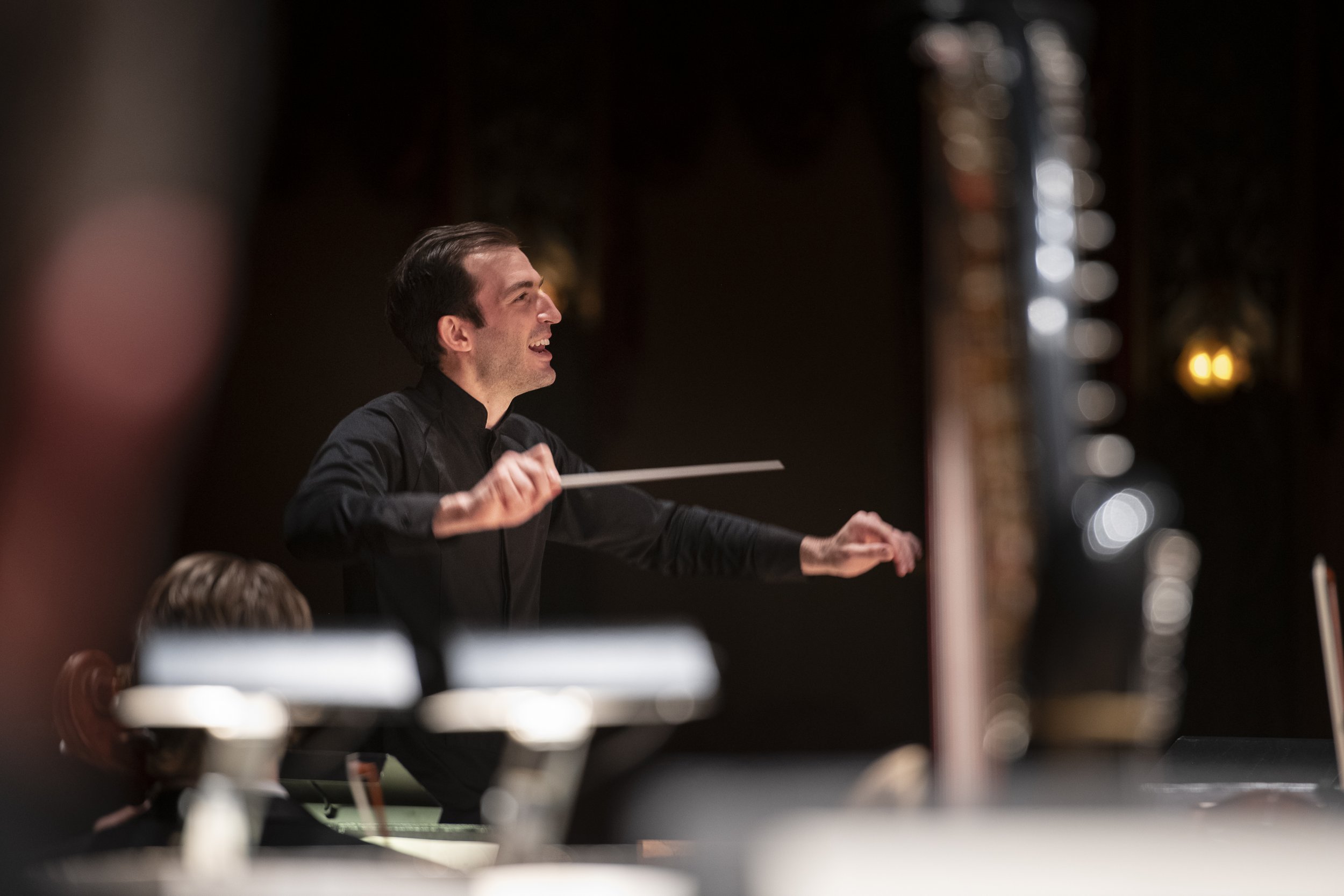
Photo: Jeffrey Crane
Welcome to the interview, Caleb! Can you introduce yourself to our audience and tell us about your relationship with LEAD?
I'm Caleb Young, an American conductor, and before moving to Europe I was living and working full-time in the United States. I was a staff conductor with an orchestra in Indiana conducting sometimes up to 45 concerts in a 35-weeks-long season. It was intense, but at a certain point I knew I wanted to build a life and career in Europe. My connection with LEAD! really began during the pandemic. I applied to the second Fiskars Festival and got accepted but I couldn’t actually travel because of restrictions. Still, that application led to conversations on Zoom with Jukka-Pekka Saraste and the team, and those conversations turned into mentorship.
Eventually I became part of the adjacent project from the LEAD! Foundation, called the LEAD! Artists program. I traveled with Jukka-Pekka in North America, Detroit, Oslo, Stockholm, Helsinki and Berlin. I worked closely with him and that experience completely changed my trajectory. It gave me the confidence to move to Berlin in 2021. Those two years were incredibly informative and really a watershed moment as we say.
You are here for your debut with the Helsinki Philharmonic. Can you tell us something about the programme and what it means to you?
For my debut, I wanted to present a program that felt personal and meaningful. We performed Bernstein’s Candide Overture, John Williams’ Viola Concerto with Antoine Tamestit, and Shostakovich’s Ninth Symphony. The Viola concerto is especially important to me, because I’ve worked with John over the years, and this piece has actually been largely unavailable for performance. It’s essentially been sitting in a locked archive in Los Angeles.
So when Antoine proposed performing this concerto, I asked John if we could perform it here in Helsinki and he gave his blessing. That made this performance incredibly special, not just because of the music, but because of what it represents. It’s one of the few times the piece has been performed since its premiere, and it was the Nordic premiere. I'm really excited about the future of the piece.
Since this is your first time conducting the Helsinki Philharmonic, I’d like to know how you as a guest conductor build trust with an orchestra you’re working with for the first time?
For me, preparation is number one. I'm a very slow learner, and I can't imagine stepping in front of an orchestra not being 125% prepared. But beyond that, I think it’s about being yourself. I compare it to going on a first date. Sometimes the chemistry is immediate, and everything just clicks. Other times it takes a bit longer to find that connection. And sometimes it’s just not there and that’s okay.
I try not to go in with preconceived ideas about an orchestra. I’ve learned that it can actually be dangerous to ask too many people what an orchestra is “like” beforehand. Every collaboration is different and I want to experience it fresh. If the connection works, it works. And if it doesn’t, we still aim to make great music together. If you look at the greatest conductors in the world, they form relationships with a handful of orchestras throughout their career where the chemistry is spot on and they stick with those orchestras.
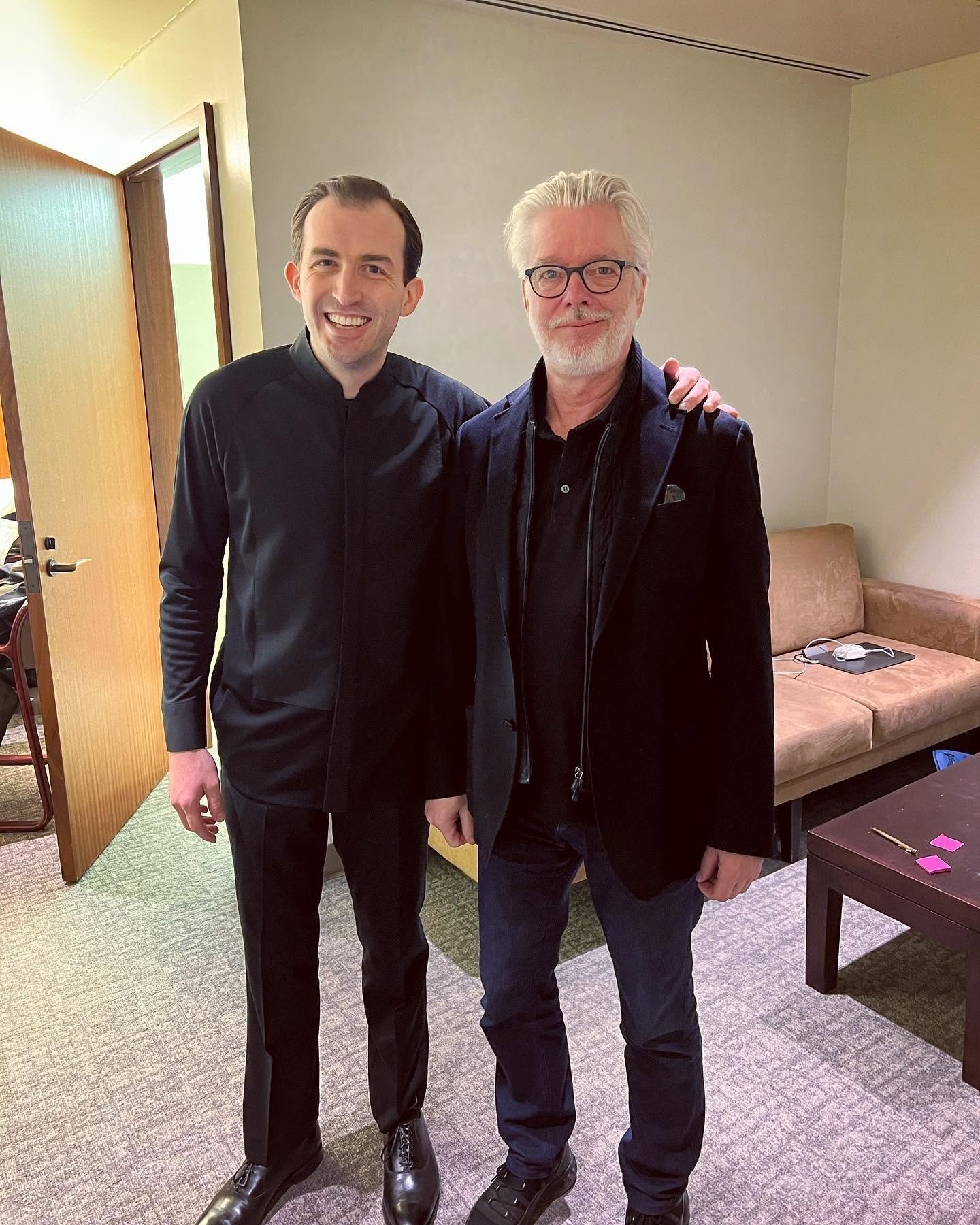
“Find your colleagues and build a
relationship, because you never know who in the world will be in a position to help you.”
You’ve worked with some of the leading orchestras in both the United States and in Europe. Do you think there are major cultural differences between orchestras depending on their location?
Yes and no. I think orchestras around the world nowadays are so multicultural that you do have a baseline of what you can expect. Not to say there aren’t any subcultures. For example here in Finland the musicians take this craft so seriously. Not that other orchestras don't but it's just very focused, very quiet, which sometimes on the podium is a bit terrifying when you cut the orchestra off and there’s only silence. You might go to some other countries where orchestras are a bit chattier, and there's a culture of asking questions and having input to the process.
What I also love about Finland is that the musical community is so connected. I live in arguably the musical capital of the world, but people are not so connected in Berlin. There's just so many people there and so many orchestras and so many things that people do every day. But here you can run into any famous artist because everybody's around.
You are a LEAD! alumnus from 2021. Thinking back, what are some of your best memories from the festival?
Fiskars is a beautiful place to go to. I remember my first trip there and I was walking by the lake. It literally felt like I was back home in North Carolina. I connect with nature so much, and I actually went to the sauna today thinking “the Finns have got it figured out.” And there's so much potential there. We have the Tanglewood festival in the United States which is one of the most famous summer festivals and this epicenter for talent, creativity and great music making. And what happens in this small village in Finland should not exist but it does. With the greatest conductors and some of the greatest players in the world. You have all the greatest Finnish conductors around the table talking about music and creating relationships. And I think it's really special.
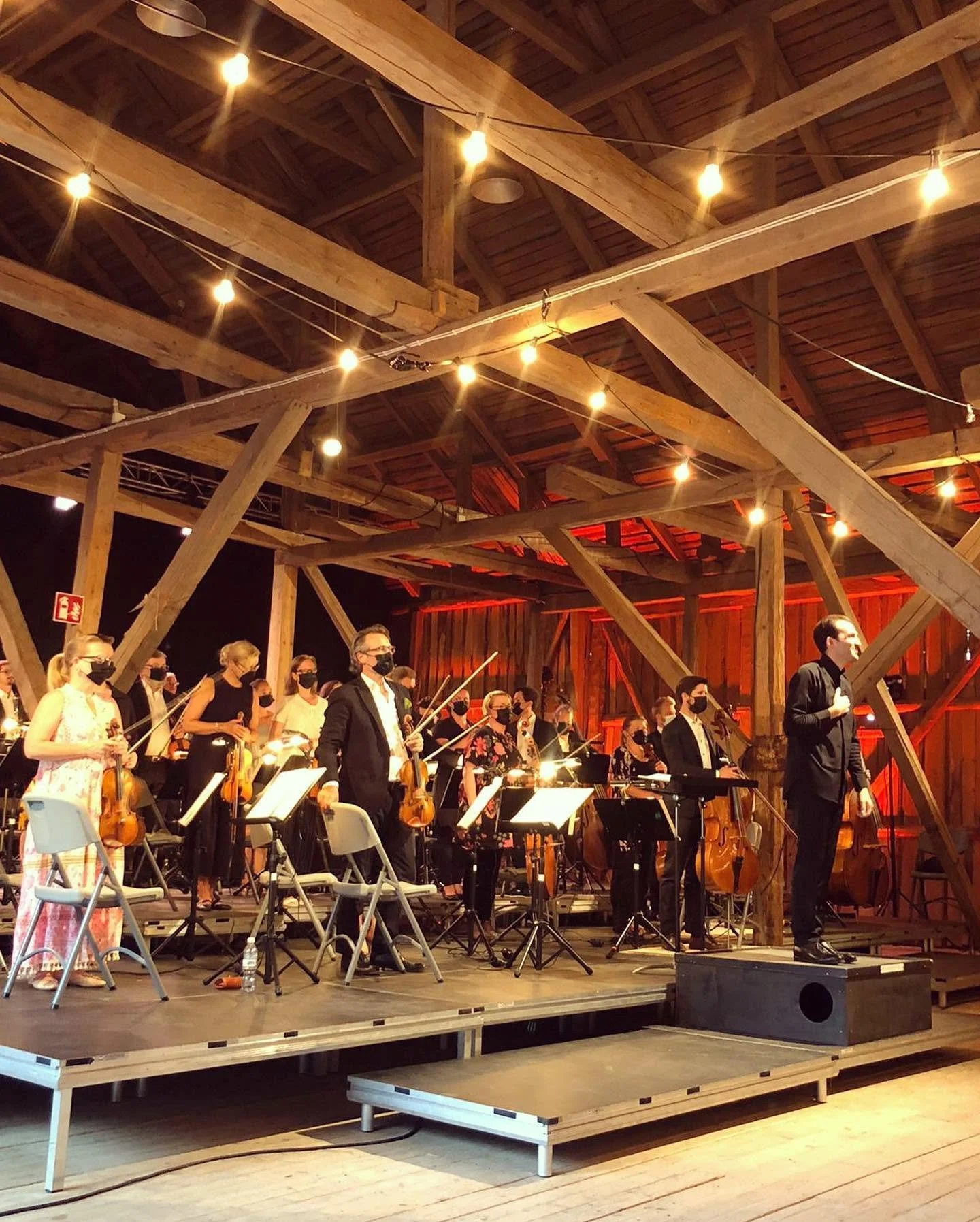
After a concert in Fiskars Summer Festival 2021.
Why are programs like those of the LEAD! Foundation important for the next generation of conductors?
Festivals and programmes like Tanglewood, Aspen or LEAD! are situated in nature for a reason: they provide a space where students can focus on the art and nothing else, allowing them to hone their craft and absorb as much as possible without the same pressure one would have in a typical academic setting. And these programs are essential for networking; relationships are everything in this business. I met so many amazing people and colleagues who I’m still in contact with regularly. I think my greatest memories are about meeting all of the wonderful folks in Fiskars every summer and every Easter festival.
What advice would you give to other young musicians who aspire to perform professionally?
If you're a student right now, the thing I would recommend is find your colleagues and build a relationship, because you never know who in the world will be in a position to help you. My buddy and I had aspirations of being conductors and we literally paid our friends in pizza to play for us. Be a good person, someone that people want to work with. Be humble. Obviously there's a certain amount of strength that we have to have in this business. It's a scary and vulnerable job in a way. I would also say that focus on your network and be as prepared as possible because you never know when an opportunity will come. And try to create your own opportunities as a young conductor because that's what I essentially had to do.
