Soloist Spotlight: Cellist Saima Malmivaara at Fiskars Easter Sessions
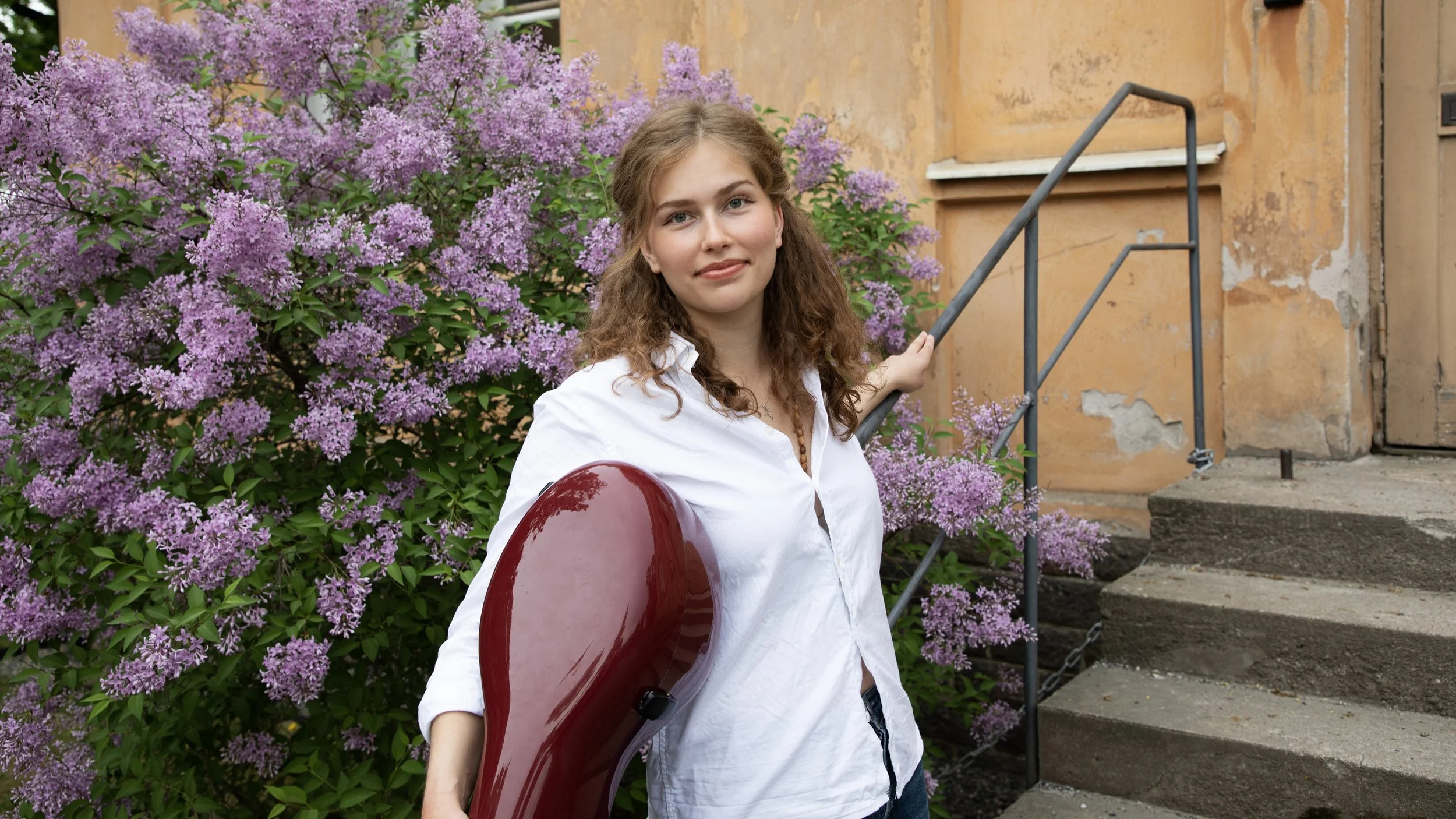
Fiskars Easter Sessions 2026 is right around the corner, and we can’t wait to welcome our young musicians to the stage. We sat down with one of our soloists, 20-year-old cellist Saima Malmivaara, to talk about her experiences with LEAD! Foundation, the Finnish String Academy and her journey as a rising instrumental talent.
Hello and welcome to the interview! Could you tell us who you are and what is your relationship with LEAD?
My name is Saima Malmivaara and I’m a 20-year-old cellist from Finland, currently studying in Germany. My first introduction to LEAD! was now almost 2 years ago when LEAD! cooperated with Helsinki Philharmonic Orchestra and did Mahler’s 8th Symphony with maestro Saraste - an experience I’ll never forget. After that I participated pretty much to every project I possibly could and this upcoming Easter Sessions will be my 5th project with these amazing people.
LEAD! is very special in many ways. The core of the whole foundation is musical leadership training, which is perhaps not so widely talked about, though extremely important. For me LEAD! is easily one of the best things a young musician can do in Finland. I admire the never-ending dedication the mentors have for the future generation of musicians. LEAD! has been my primary educator in orchestra playing and it has given me precious memories and friends I’ll carry with me my whole life.
Can you tell us about the specific pieces or program you will be performing at the Easter Sessions, and what drew you to this repertoire?
I’m very impressed by both the chamber music and the orchestra programs that were put together for this festival. A fantastic mixture of beloved classics and exciting, little-known works. Looking very forward to it!
I’ll be playing in two pieces this time. First one is Dvořák’s “American“ string quartet, propably his most played chamber music work, which he composed during his time in the States. I’m alwas happy to play in a string quartet after many years doing mostly piano trio.
I also get to play the solo part in J. C. Bach’s Sinfonia Concertante together with the wonderful Lilja! This one I had never heard of before, and I am very excited to see how it turns out. The cello part especially is quite tricky, but working with anything uncomfortable brings you further.
This festival is organised in collaboration with The Finnish String Academy. How has the academy influenced your professional development?
I’ve been priviledged to have had the opportunity to study in The String Academy from the moment the cello department was founded in 2020. The 14-year-old Saima had finally found a place with other young cellists who loved music, worked hard and had the same dreams and goals. For me this was revolutionary. Without that change I wouldn’t have been able to share my dearest passion with anyone, and this path of ours is really hard to walk alone. The education itself was a complete upgrade and especially in later years we got countless valuable lessons with both Finnish legends and international masters.
I see the whole String Academy as one of the saviors of the Finnish music culture. In such a small and somewhat isolated country we easily end up living in a bubble, nothing changes and no one dares to try anything different. This is something that must be fought against by keeping up with the rest of the world. This country clearly has great people who deserve top education.
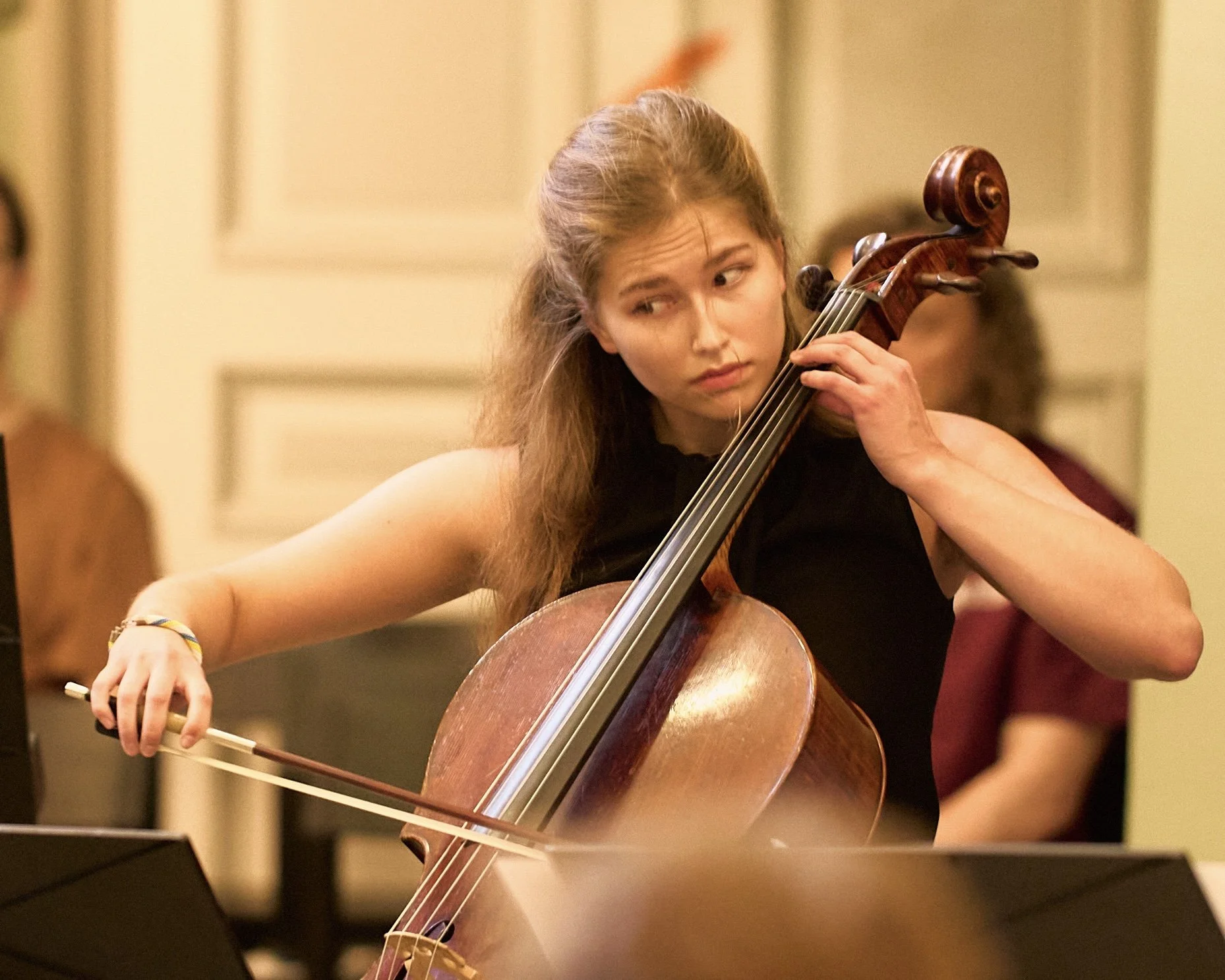
How do you approach a new or a particularly challenging piece of music?
Honestly, not very well. For someone with an attention span of a 3-year-old, this is one of my weaknesses. To practice practicing is definitely something I’ll be focusing on during my bachelor studies. Its the act of growing from a student to a professional.
When learning new pieces, listening and mental practicing is super important. I’ve always learned everything by heart and going through different recordings has a significant role there. This helps me see the whole picture, and planning my own interpretation comes naturally that way. When I know what I want, the actual practicing is more structured and the musicality will always be the first priority.
Could you share a bit about your cello; its history, its character, and why it is the right instrument for you?
I play a Bernardel cello built in Paris in 1836, and unfortunately that’s just about everything I know. Apparently it had not been played for a long time until someone found it and sold it to a legendary Finnish luthier Ilkka Vainio through an auction. Thats when we met. I was 15 at the time.
The cello has a very warm and soothing, though bright sound. I constantly keep discovering new colors it can produce as if it gradually opens up after decades of not being in use. Getting to play a fine professional instrument from a young age had a huge impact to my development as a cellist. I will always be thankful for that and I’m hoping to share many years to come with this wonderful instrument.
Music festivals often involve a period of focused intense work. How do you maintain your physical and mental well-being during such a demanding time?
Good practice and thorough preparation in advance reduces my stress the best. I find these things vital especially for festivals, where you are expected to rehearse and perform multiple demanding works, sometimes only within few days. Preparation is not only a way to keep me sane during intensive weeks full of concerts, but also a way to be respectful towards the incredible music and the people I work with.
Stress is a big part of this profession, no point denying it. Many people, including myself, often end up performing the best under pressure, and I feel like the most uncomfortable situations taught me the most. That’s why I try my best to find stress as an ally rather than an enemy. I’ve been very lucky to have little to no major physical challenges. I find pretty much any type of movement helpful for my occational aches, my movement of choice being running outside enjoying nature.
“Before the first orchestra rehearsal one should try to learn the piece better than the conductor. This wisdom applies to any repertoire.”
Do you balance your busy life as a performer with non-musical activities or hobbies?
I enjoy and consume lots of different art forms. There’s a straight connection between the music I play and the books I read or the paintings I go see. I get so much substance to my own work when I educate myself in other arts as well.
I’ve always liked learning languages and I learned quite a few at school. Now I’m stuck with German but after getting that under control I’d love to keep learning new ones. I think the world just opens up in a totally different way when you make the effort of learning languages.
Hanging out with friends and meeting new ones is also why I live and breath; I wouldn’t achieve anything in this world without the people around me. Sometimes what I really need is a group of people I love, doing nothing special, talking and enjoying each others company, potentially destroying some beers in some nice place. Simple joys.
What advice would you give to other young musicians who aspire to perform professionally?
I would dedicate a lot of time to chamber music. It helps with everything and you will benefit from it greatly regardless of where you find yourself working. Finding great people to play and intensively work with was one of the greatest blessings of my life. Through chamber music I got better as a solo player as well as an orchestra musician while issues, such as stage fright, were eased.
This second advice I actually got from a member of the Berliner Phil, and I stand behind it completely. According to him, before the first orchestra rehearsal one should try to learn the piece better than the conductor. This wisdom applies to any repertoire. Only knowing your part is like reading a book but skipping every other page. I see this as one way for us students to become more like professionals. And the best thing: preparation brings confidence, which in turn grants us the freedom to express ourselfs and bloom.
Saima and other talented young musicians will perform in a series of chamber music and orchestra concerts during Fiskars Easter Sessions 6.4.–12.4.2026. Click the link below and secure your own seat!
